
Your solar panels will generate more energy than you use — the question is, what happens to it?
Battery & Virtual Battery Storage
When you invest in solar panels (whether on a tiled or flat roof, car port or a custom designed pergola), one of the most important decisions you’ll face is how to handle the energy your system generates but doesn’t immediately use. Today, there are two main approaches: a physical battery installed at your property, or a virtual battery through your energy supplier — and understanding the difference could save you thousands.
What is a Virtual Battery?
A virtual battery — sometimes called “exporting to the grid” or “net metering“. This allows you to sell any surplus electricity your solar panels generate directly back to the national grid. Rather than storing energy in a physical unit on your wall, your energy supplier effectively acts as your storage facility. When you produce more than you need, you export it and earn a payment. When you need more than you’re generating — at night, or on overcast days — you simply draw from the grid as normal.
For most households and businesses in most locations, this is now the most popular and practical way to manage solar energy output. The technology behind it is straightforward, and the financial model is easy to understand: generate surplus, export it, get paid.
Click here for more information about the payback period or find more about how solar panels increase property value.
Weighing your options
What are the advantages of virtual battery?
- Significantly lower initial installation costs — no physical battery hardware required, making solar more accessible from day one.
- Earn a income for every unit of electricity you send back to the grid.
- Simpler system with fewer components means less maintenance and a lower risk of hardware failure over time.
- Effectively gives you access to "infinite" storage capacity through the grid — there is no limit on what you can export - benefiting you even if you're not using the property full time.
- Ideal for properties already connected to the grid wanting to reduce bills and generate income from their solar investment.
What limitations are there to having a virtual battery?
- Your property remains dependent on the grid — if there's a power cut, your solar system will not keep your home running without physical battery backup.
- Not suitable for off-grid or remote properties where mains electricity is unavailable or unreliable.
- Export rates from suppliers can vary, meaning the financial return depends on your energy tariff and supplier terms.
- You cannot achieve true energy self-sufficiency — the grid is always part of your energy equation.
- In areas with poor grid infrastructure, export limits may restrict how much surplus energy you can send back.
Physical battery storage
A physical battery — such as those in the lithium-ion storage range — is installed at your property and stores your surplus solar energy on-site. You can then draw on that stored power after dark, during cloudy periods, or during grid outages. For properties that need complete energy independence, or those in rural and off-grid locations, physical battery storage transforms a solar installation from a bill-reduction tool into a true self-sufficient energy system.
The trade-off is cost. A quality home battery adds to the initial investment. However, with energy prices continuing to fluctuate, the long-term savings from using stored solar power rather than buying from the grid at peak rates can be significant — and the payback period continues to shorten as battery technology improves.
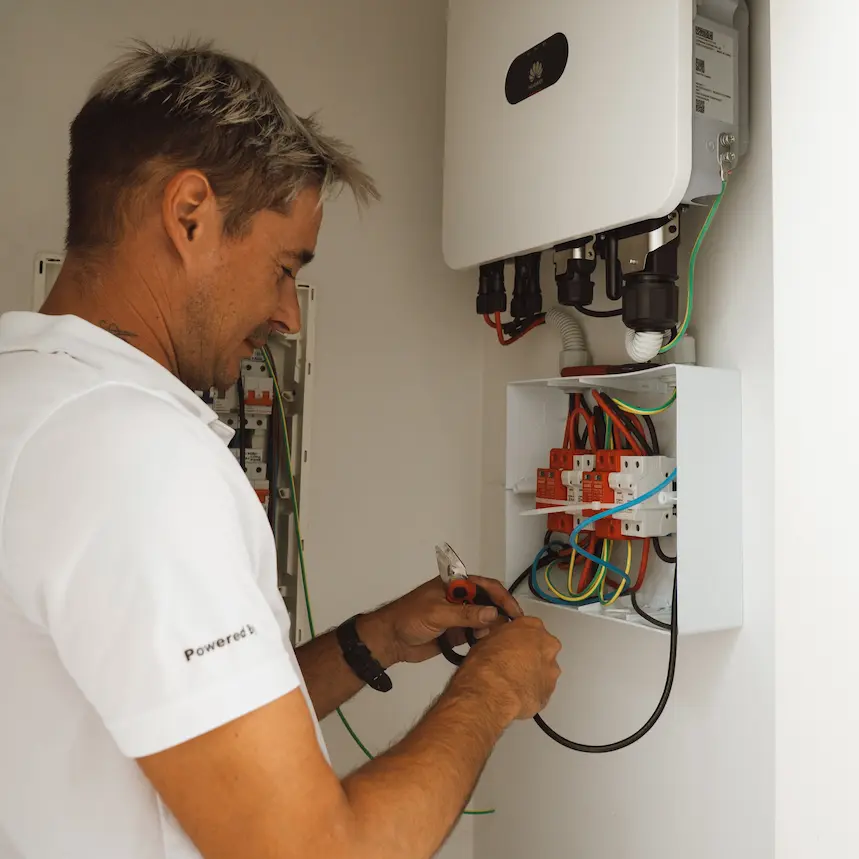
All our inverters are battery-ready
Here’s the good news: you don’t have to decide everything on day one. Every inverter we install is specifically selected to be compatible with battery storage, meaning your system can be upgraded at any point in the future. Many of our customers start with a virtual battery arrangement — keeping upfront costs down and beginning to generate income from their solar investment straight away — then add a physical battery when the time is right for them. Whether your circumstances change, energy prices shift, or you simply decide you want greater independence, the path to full battery storage is always open to you. There is no need to replace or significantly alter your existing installation.
A flexible path forward
Think of it as a journey rather than a single decision. The most common route our customers take looks like this:
Step 1 — Install solar
Panels and a battery-ready inverter installed. Begin generating clean energy immediately.
Step 2 — Virtual battery
Export surplus to the grid, earn income, and reduce your bills from day one.
Step 3 — Add battery
Upgrade to physical storage whenever it suits you. Full energy independence, zero system replacement.
Whether you’re looking to reduce your energy bills, earn income from surplus generation, achieve off-grid independence, or simply reduce your carbon footprint — there is a storage solution that fits your situation. We’ll help you choose the right starting point, knowing that your system is always ready to grow with your needs.
Not sure which option suits your property?
Speak to our team for a no-obligation assessment and personalised recommendation.
Call us: +34 654 596 247 ↗